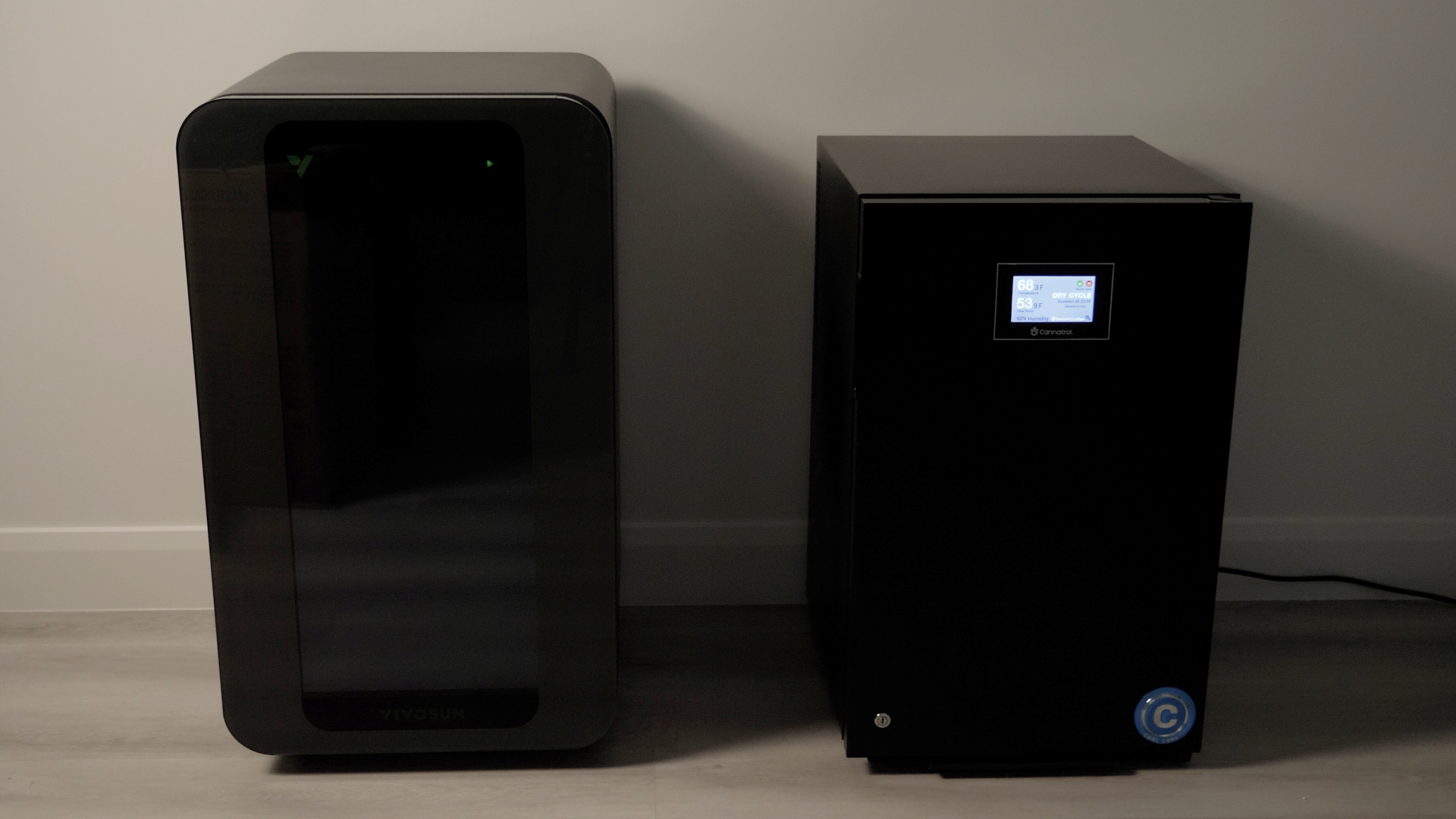
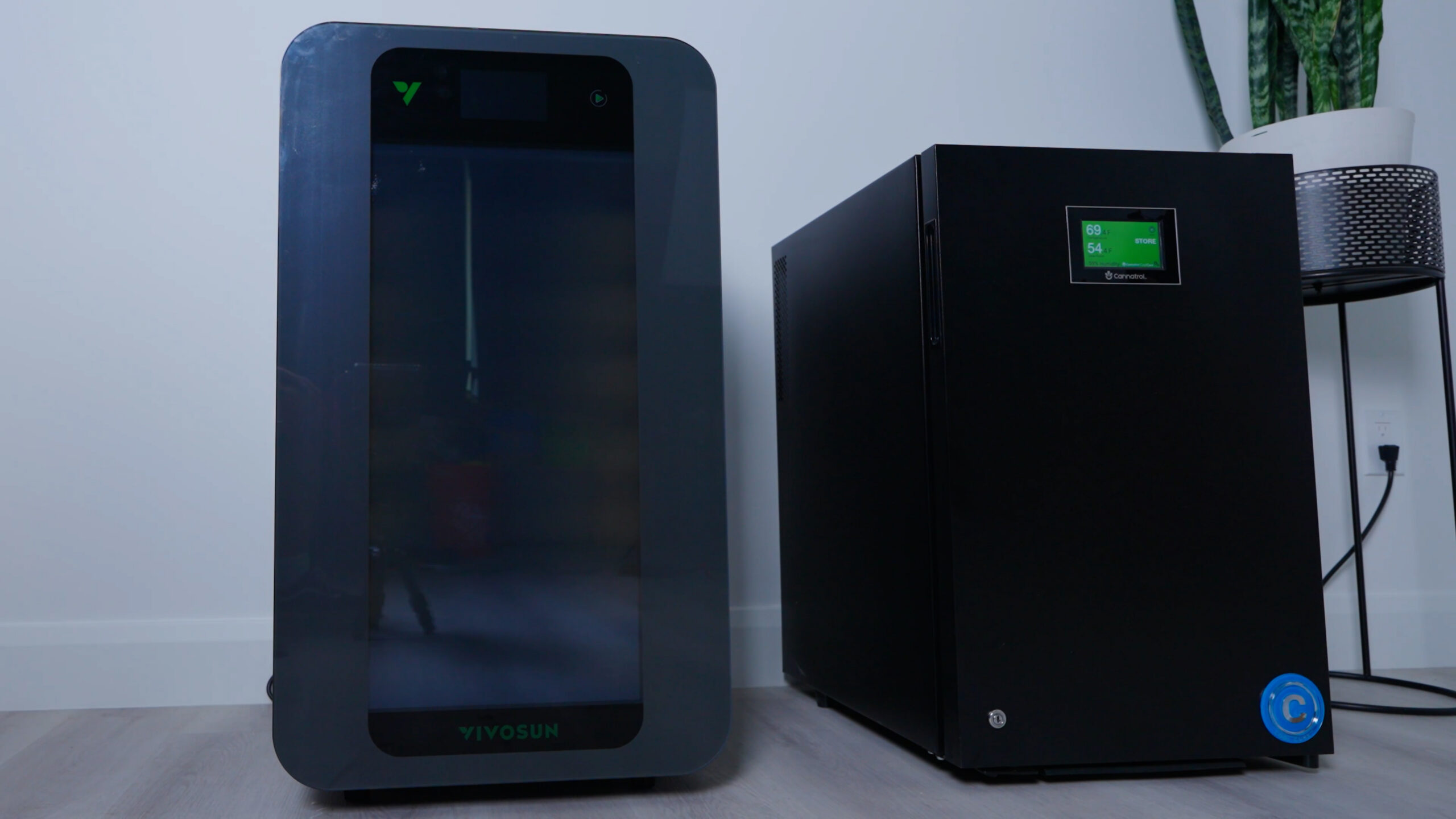
Drying and curing cannabis are two of the most important stages of the growing process. Even if you’ve grown dense, frosty flowers, poor drying conditions can reduce taste, smell, effects, and overall quality. In recent years, automated cannabis drying machines have become increasingly popular because they simplify the post-harvest process and reduce the need to constantly monitor environmental conditions. Two of the best-known options are the Cannatrol Cool Cure and the Vivosun VCure.
Both machines are designed to provide a controlled environment that gradually removes moisture while preserving flower quality, but they take different approaches to accomplishing that goal. To compare these machines with a traditional grow tent dry, I dried the same harvest using all three methods:
- Cannatrol Cool Cure
- Vivosun VCure
- Traditional grow tent drying
After drying, I evaluated the flower through visual inspection, at-home testing for THC, CBD, moisture content, and water activity, and a consumption test. The results revealed some pros and cons that weren’t immediately obvious during the drying process.
If you’re considering purchasing one of these machines, this article will help you understand the good, the bad, and whether or not one of these machines is a worthwhile investment for you.
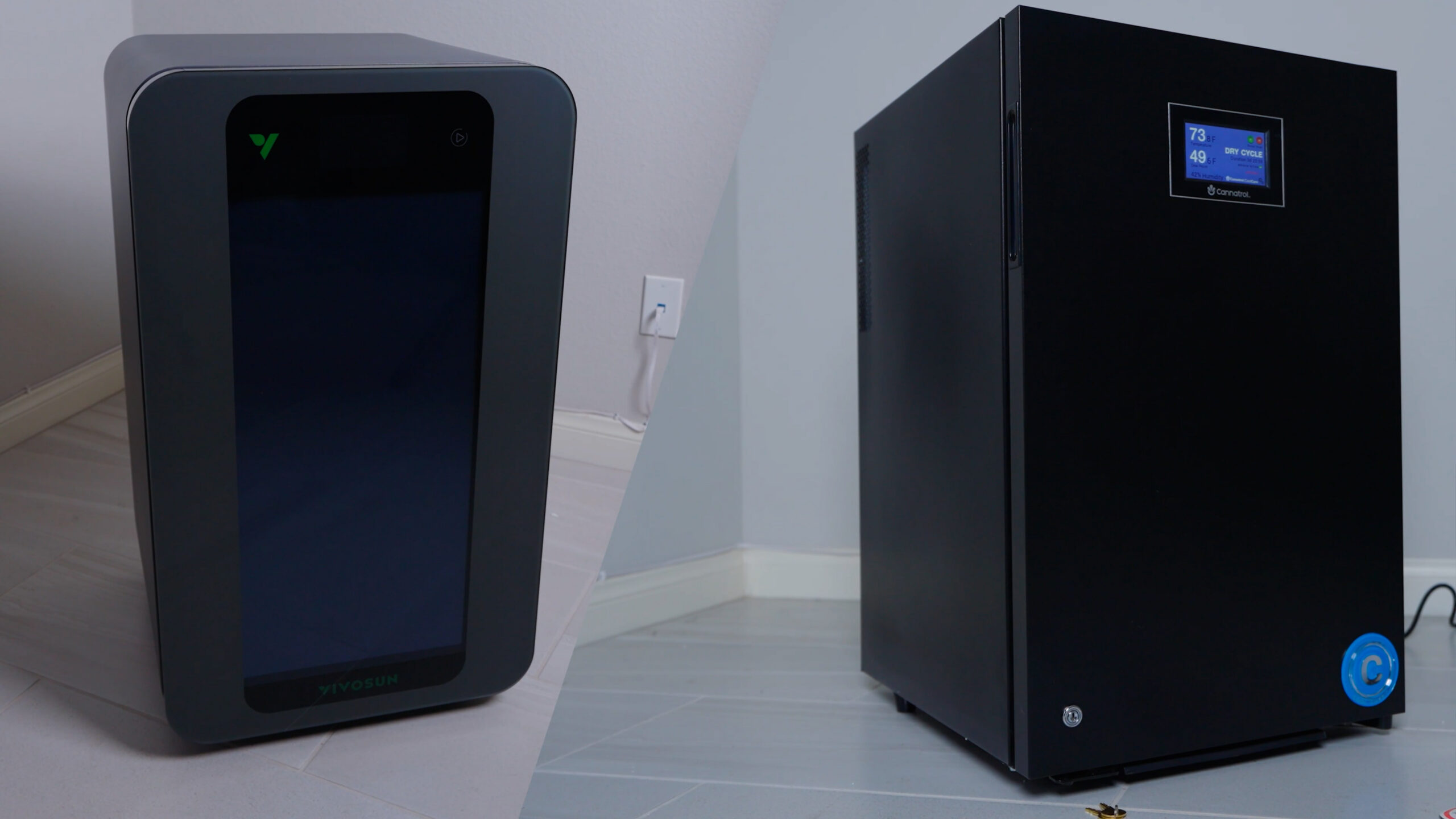
What Are the Cannatrol Cool Cure and Vivosun VCure?
Both machines are designed to automate one of the most challenging parts of growing cannabis: drying harvested flower consistently. Traditionally, growers hang branches inside a drying room or grow tent while trying to maintain stable temperature, humidity, airflow, and air exchange. Even experienced growers can struggle to maintain these conditions, especially if they live in climates that are naturally hot, cold, dry, or humid.
Automated drying machines help eliminate much of that guesswork by creating a controlled environment that gradually removes moisture from the harvested flower. The goal isn’t necessarily to dry cannabis faster, but rather to dry it more consistently while reducing the risk of overdrying, mold development, or uneven drying throughout the buds.
While the Cannatrol Cool Cure and Vivosun VCure share that same goal, the technology behind each machine is quite different.
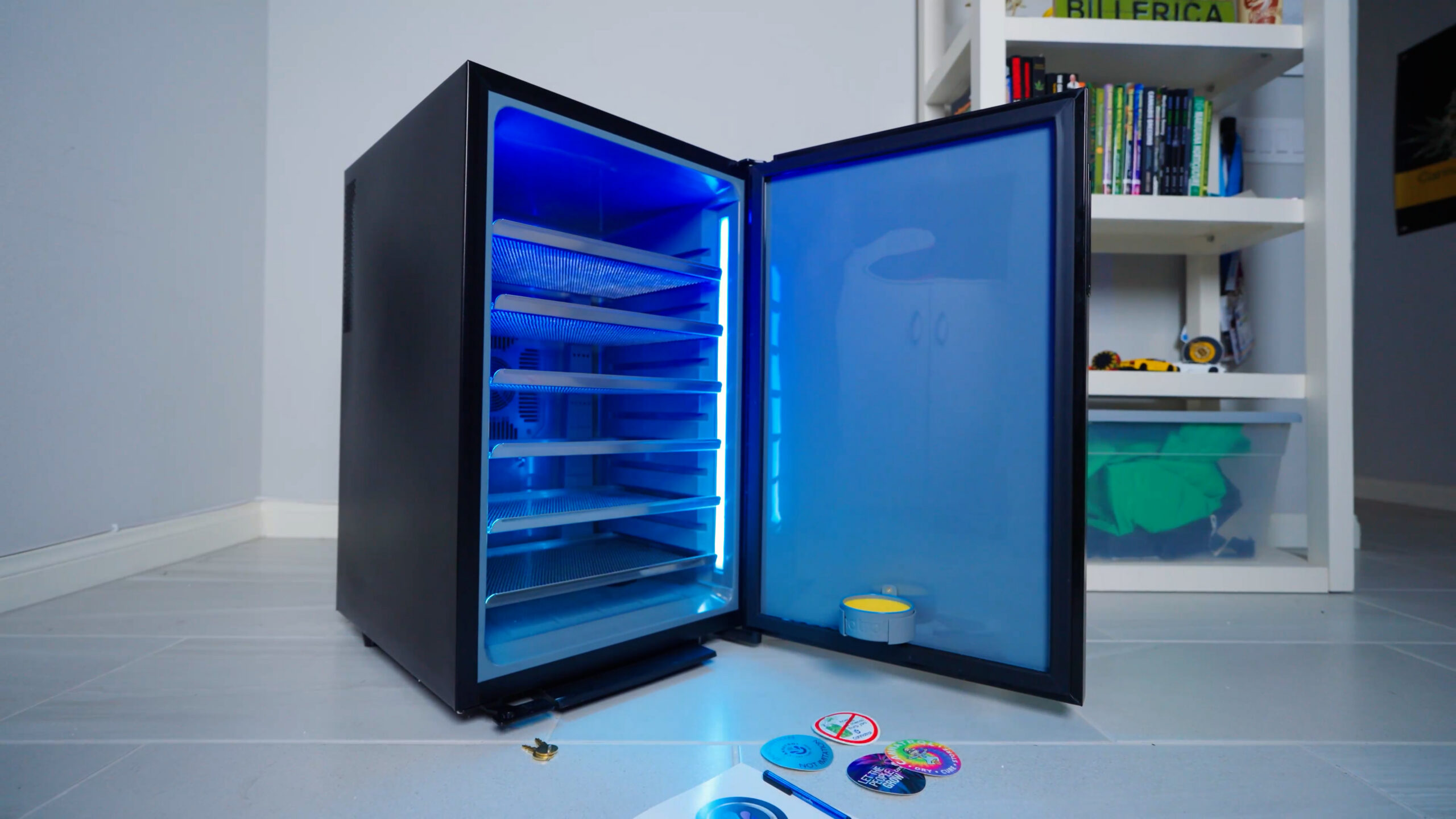
How Each Machine Dries Cannabis
The Cannatrol Cool Cure uses what the company calls Vaportrol Technology. Rather than focusing only on temperature and relative humidity, the system is designed to control dew point, which influences vapor pressure and ultimately affects how quickly moisture leaves the flower.
This is important because relative humidity alone doesn’t tell the entire story. For example, 60% relative humidity at 60°F (15.6°C) creates a different drying environment than 60% relative humidity at 75°F (23.9°C). By controlling dew point, Cannatrol aims to create a slower, more consistent drying process.
According to Cannatrol, maintaining stable vapor pressure also helps minimize pressure changes inside trichome heads, potentially reducing terpene loss during drying.
It’s also worth mentioning that older Cool Cure models could struggle to reach their target temperature if the surrounding room was more than about 10°F (5.5°C) warmer than the machine’s set temperature. However, Cannatrol says this issue has been addressed in the newer Cool Cure models.
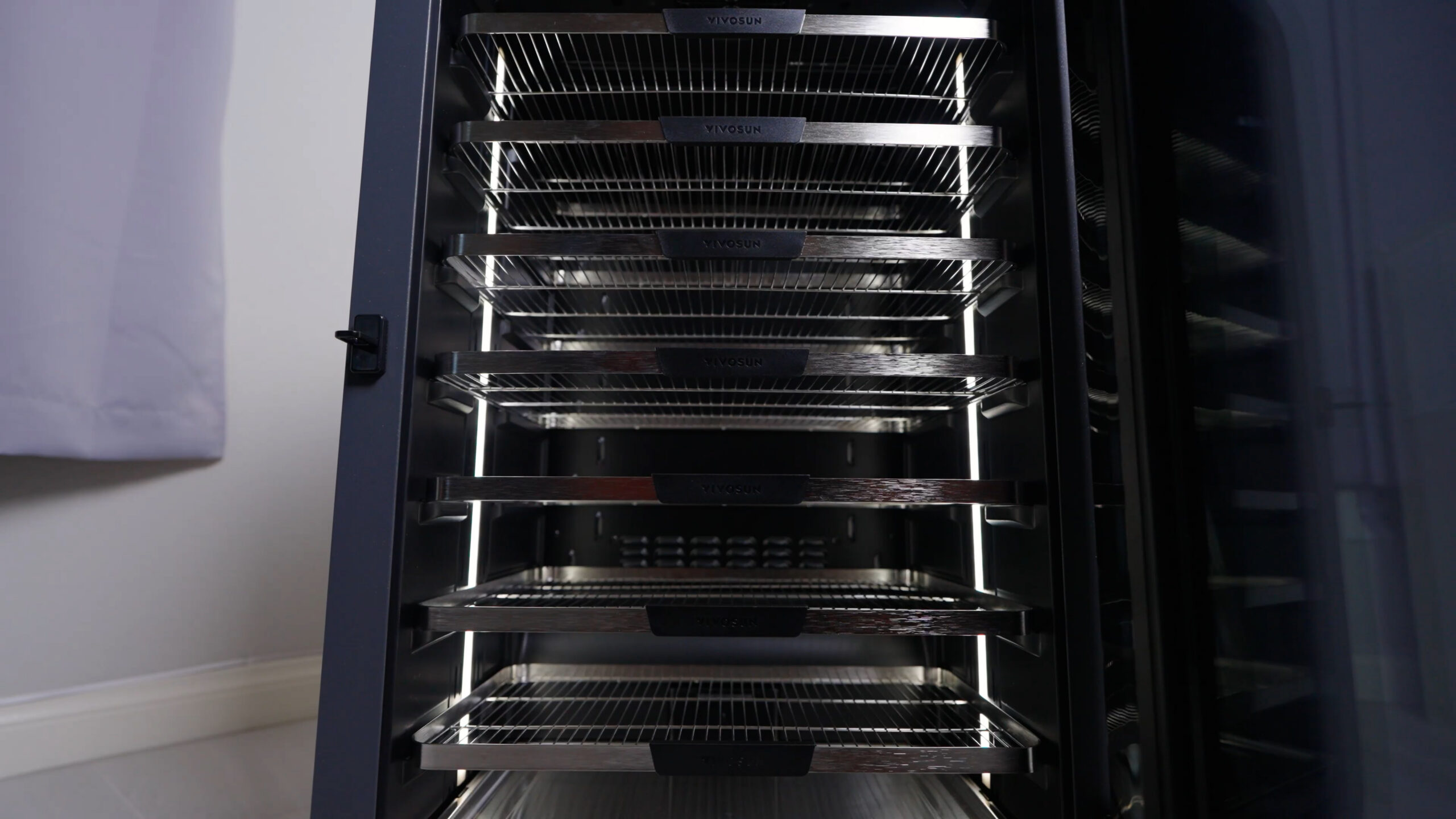
The Vivosun VCure takes a more traditional approach to controlling the drying environment. It automatically regulates temperature, relative humidity, and airflow using a built-in refrigeration compressor, similar to what you’d find in a household refrigerator, to actively cool the chamber while removing moisture from the air.
While the Cannatrol focuses on controlling dew point and vapor pressure, the VCure takes a different approach by directly regulating temperature, relative humidity, and airflow throughout the drying process. Like the Cannatrol, the VCure also manages airflow to prevent the outside of the buds from drying much faster than the inside. Some growers refer to this as case hardening.
Although these machines use different technologies, they’re both trying to accomplish the same goal: gradually and evenly removing moisture from the buds while preserving flower quality and reducing the risk of mold or overdrying.
Price Comparison
Price is one of the biggest deciding factors for most growers, and these machines certainly aren’t cheap.
At the time of testing, here’s how the prices compared:
| Machine | Price |
|---|---|
| Vivosun VCure | $999 |
| Cannatrol Cool Cure C | $999 |
| Cannatrol Cool Cure C+ | $1,049 |
| Cannatrol Cool Cure C2 | $1,199 |
As you can see, the VCure and the base Cannatrol Cool Cure C are priced the same, while the C+ and C2 cost a little more.
It’s also worth mentioning that these companies manufacture their products in different parts of the world, which may contribute to differences in pricing. Vivosun is headquartered in China, while Cannatrol manufactures its products in the United States, where production and labor costs are generally higher.
Of course, a lower price doesn’t automatically mean better value. What really matters is what you’re getting for your money. Does spending more get you better performance, more features, or better overall results?
That’s what I wanted to find out.
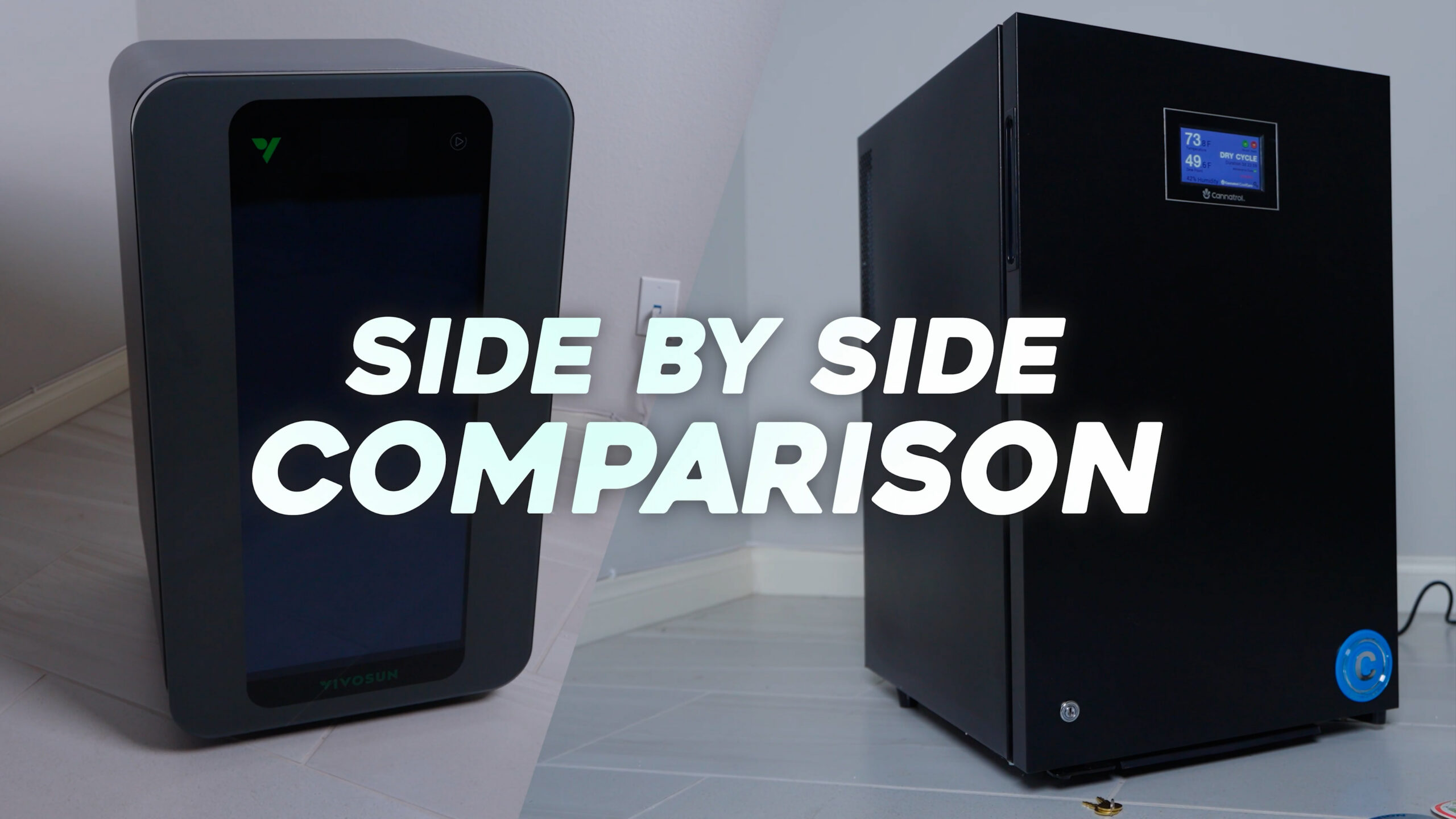
Side-by-Side Feature Comparison
| Feature | Cannatrol Cool Cure | Vivosun VCure |
|---|---|---|
| Starting Price | $999 | $999 |
| Wi-Fi | C+ and C2 models | Yes |
| Mobile App | C+ and C2 models | Yes |
| Capacity | Up to 2.5 lbs (1.13 kg) wet flower | Up to 2.5 lbs (1.13 kg) wet flower |
| Temperature Range | 58–76°F (14–24°C) | 50–72°F (10–22°C) |
| Humidity Control | 35–100% RH | 55–65% RH |
| Noise | ≤30 dB | ≤40 dB |
| Warranty | 2 years | 2 years |
Although both manufacturers advertise similar capacities, realistically, these machines are best suited for growers harvesting one or maybe two smaller plants at a time. If you’re growing larger plants or harvesting several plants at once, you may find yourself running out of space.
For growers producing larger harvests, staggering harvest dates can make these machines much more practical.
Both machines also have different maintenance requirements. The Cannatrol requires you to periodically add water to its sponge and has a removable tray at the bottom that collects water during the drying process. The VCure also has a removable tray, but instead of collecting water, you can add water to it if you’re in a dry environment to help regulate the humidity inside the machine.

How I Tested Them
Rather than comparing different harvests grown under different conditions, I wanted to use flower from the same grow to make the comparison as fair as possible.
I harvested four Chill Out OG plants grown from seed, so each plant was a different phenotype. I took branches from each plant and divided them between the Cannatrol and the VCure. The remaining branches were dried in the same 4 × 4 grow tent where the plants had been grown.


This allowed me to compare all three drying methods using flower from the same harvest while reducing some of the differences caused by genetics and growing conditions.
Verifying Environmental Conditions
I also wanted to make sure the machines were actually maintaining the temperature and humidity levels they were reporting. To do this, I used a SensorPush monitor, which independently measures temperature and relative humidity. Since I only had one monitor, I tested each machine separately.
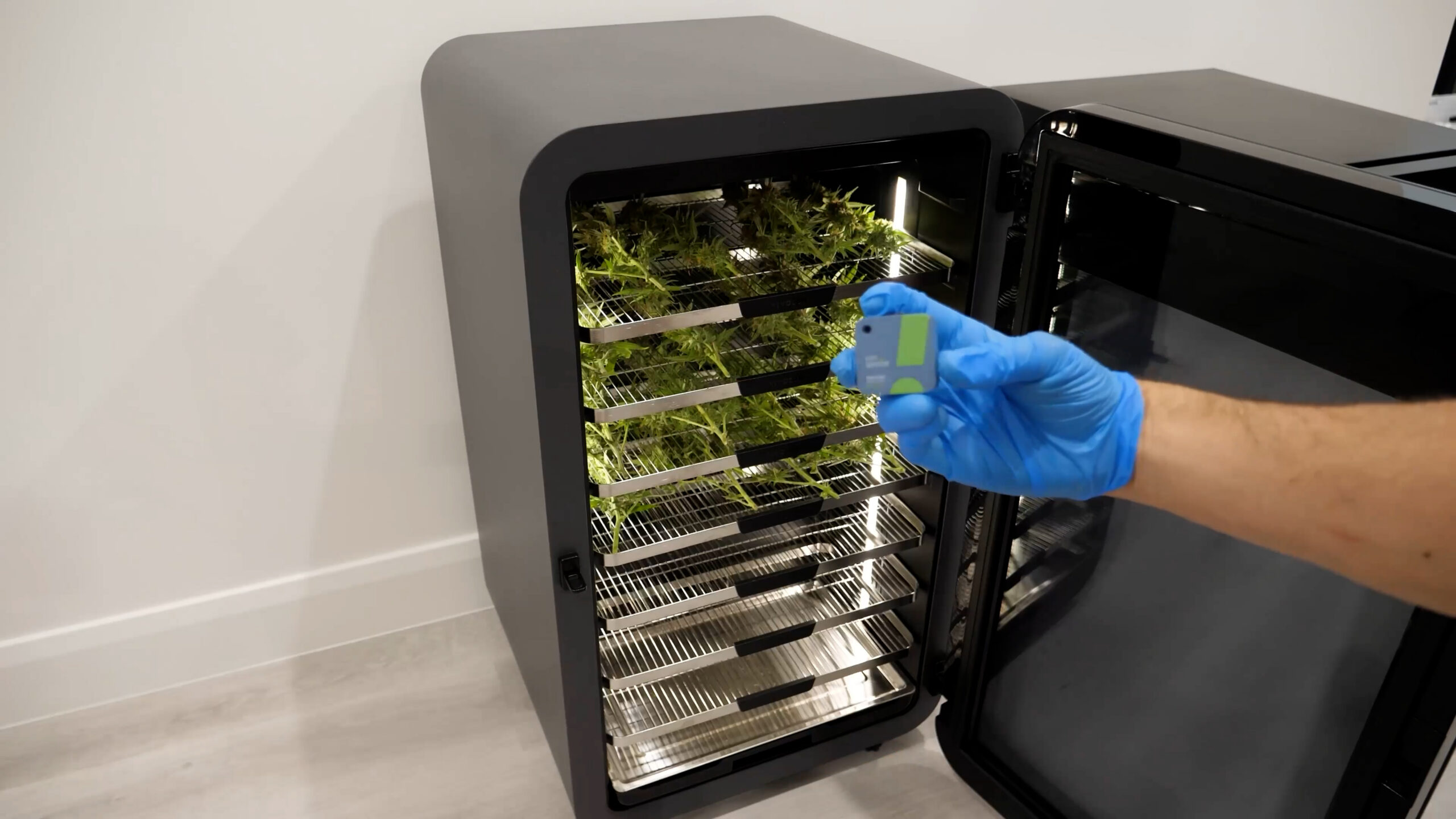
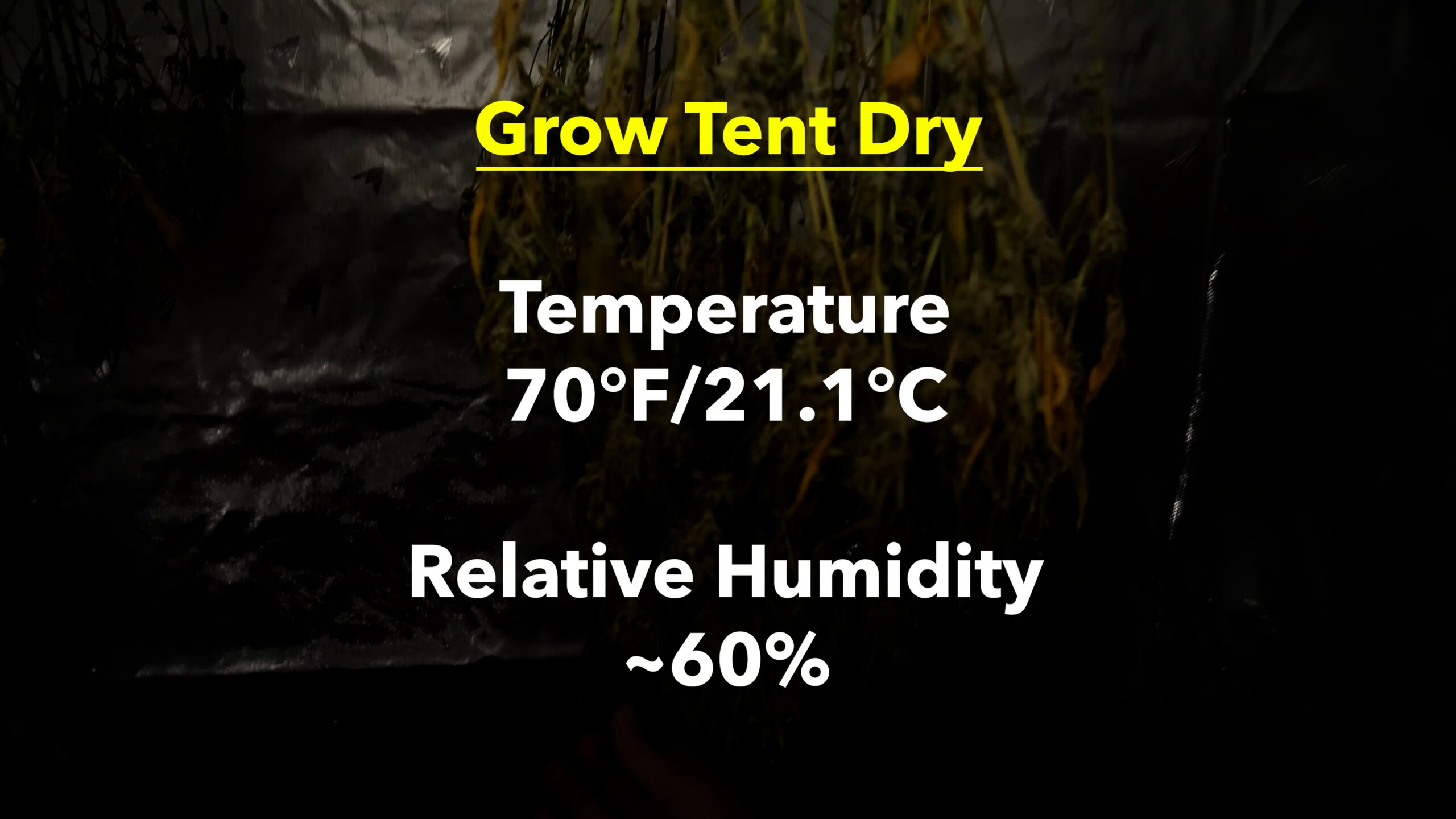
For the traditional grow tent dry, I used an AC Infinity Controller 69 Pro to monitor the environment. I aimed to keep the drying tent at approximately 70°F (21.1°C) and 60% relative humidity.
Since I live in a dry climate, I used a humidifier to help maintain humidity, with the controller set to turn it on whenever relative humidity dropped below 58%. I also had an oscillating fan running on low, but not pointed directly at the buds, to provide air circulation. The inline fan was connected as well, with the controller set to automatically exhaust air if humidity got too high.
For the Cannatrol, I used the default settings of 68°F (20°C) and a 54°F (12°C) dew point, which are the settings Cannatrol recommends.
For the VCure, I selected the Quick Cycle, which Vivosun says dries the buds and makes them ready to consume in approximately eight days.
The goal wasn’t to experiment with different settings to see which ones worked best. Instead, I wanted to see how each machine performed using the recommended or preset settings right out of the box.
Now let’s take a look at how well each machine maintained temperature and humidity during the drying process.
Vivosun VCure
The SensorPush readings matched very closely with what was displayed in the VCure app, which was good to see. However, I noticed that the temperature and humidity fluctuated quite frequently.
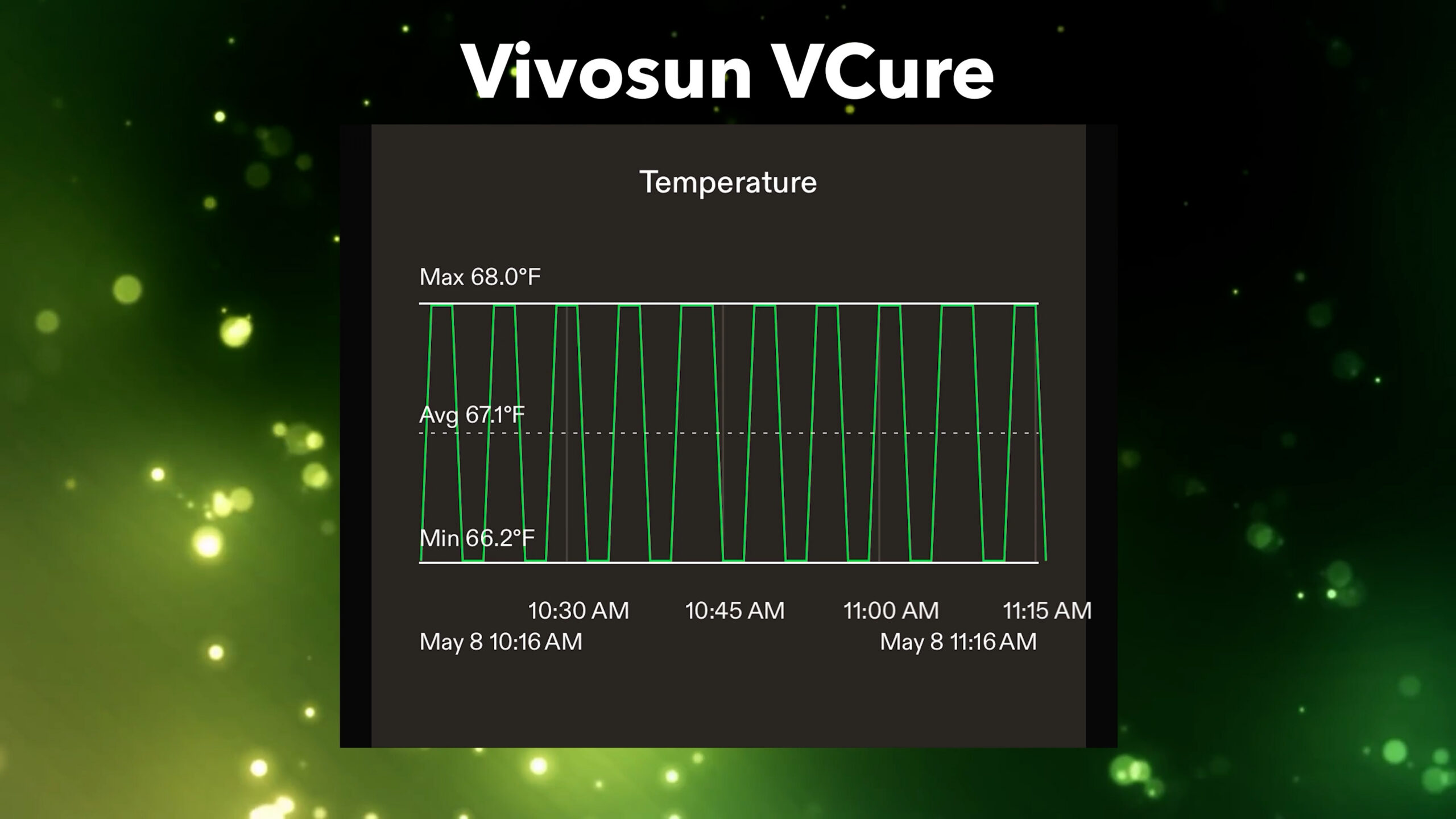
During one hour of monitoring, the temperature fluctuated between 66.2°F and 68.0°F (19.0°C to 20.0°C). That’s less than a 2°F (1.1°C) difference, but the temperature increased and decreased numerous times throughout that hour.
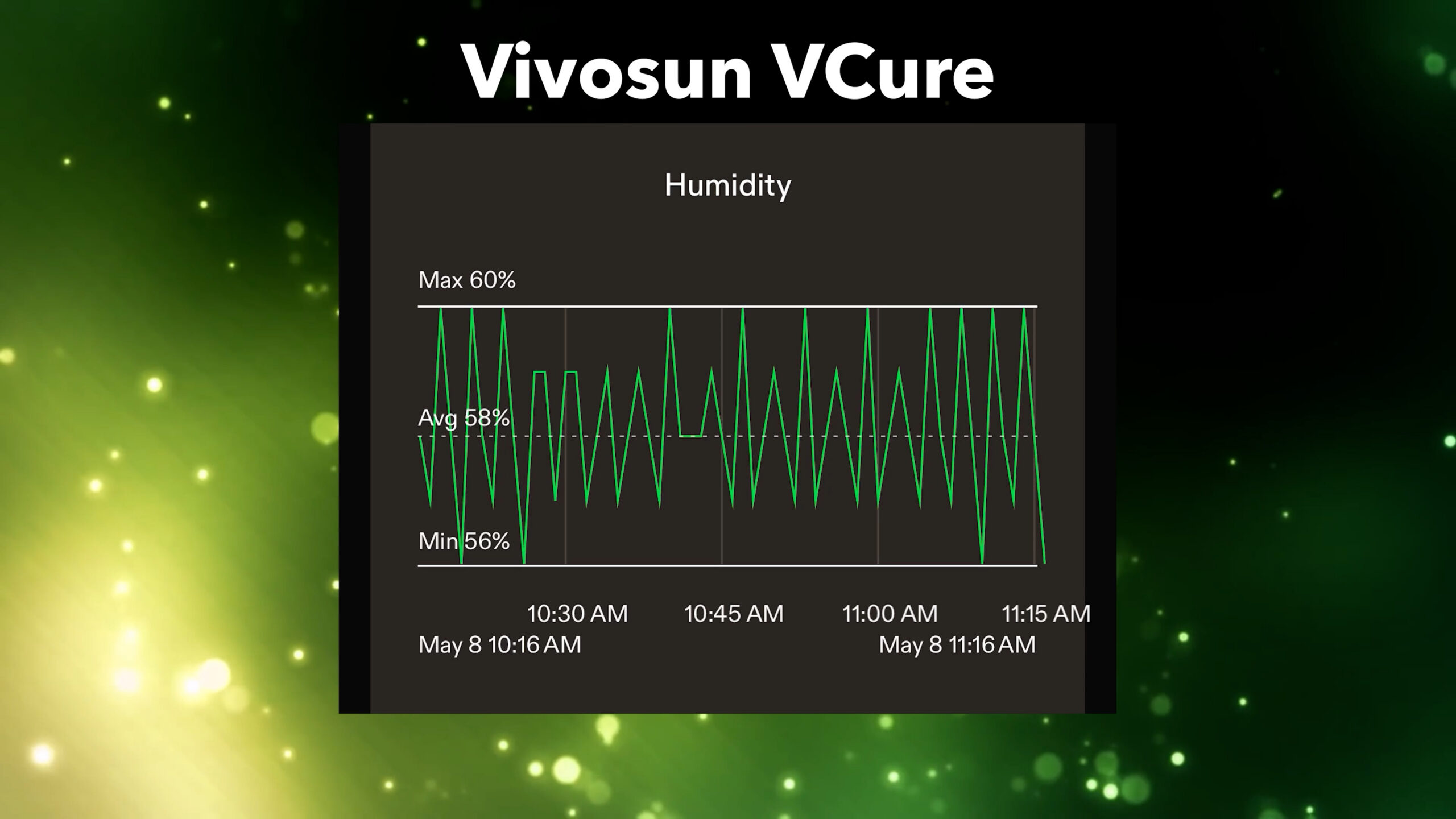
Relative humidity also fluctuated quite a bit, ranging from 56% to 60% during the same period.
Now, these aren’t large swings by any means, and they may not concern most growers. However, what stood out to me was how frequently the temperature and humidity changed, especially compared to the Cannatrol, which I’ll get into next.
Cannatrol Cool Cure
When I moved the SensorPush monitor into the Cannatrol, the results were noticeably different.

The temperature was much more stable, ranging from just 68.4°F to 68.5°F (20.2°C to 20.3°C) during the one-hour monitoring period. That’s only a tenth of a degree difference.
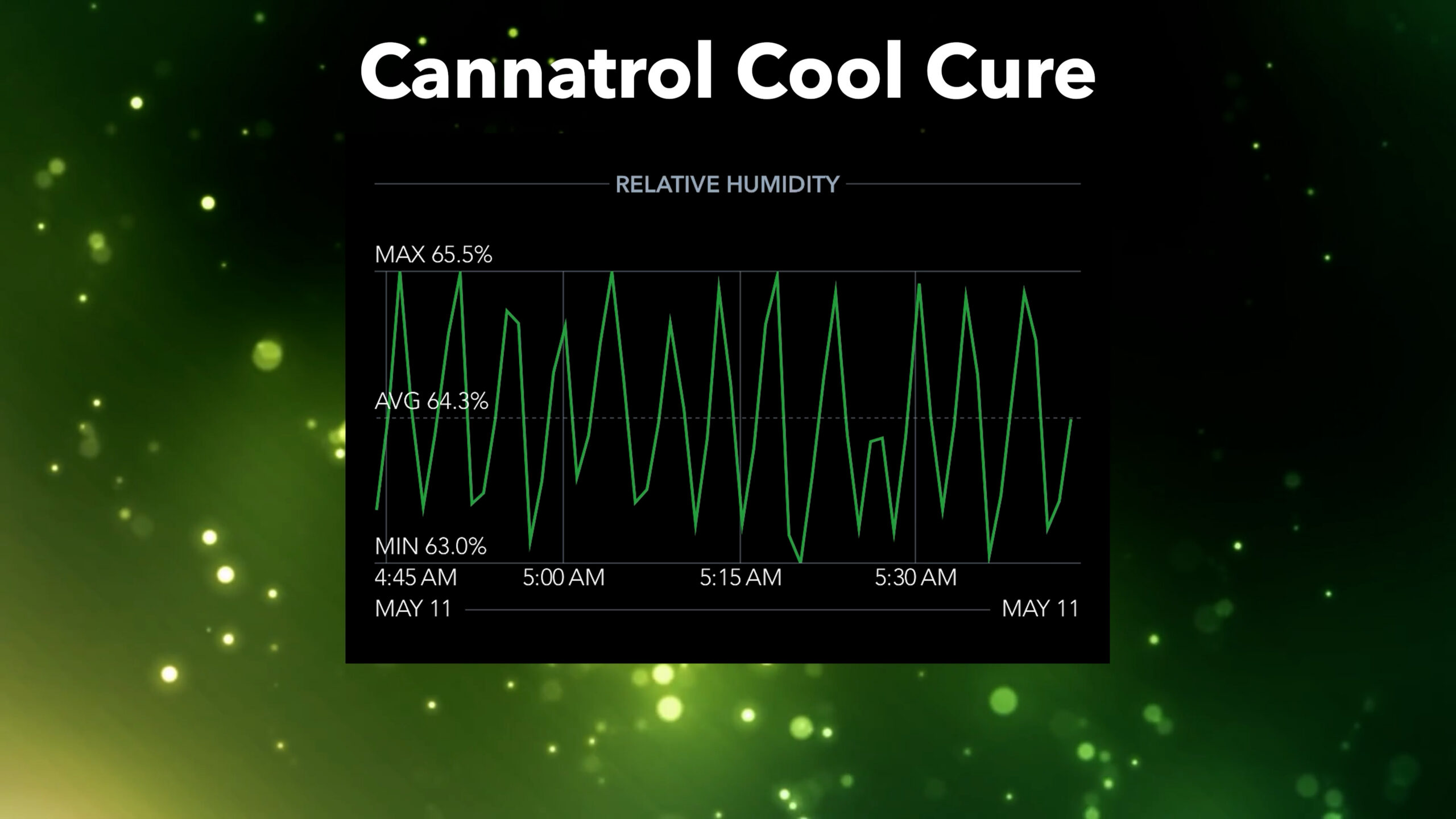
Relative humidity ranged from 63% to 65.5%, with fewer fluctuations compared to the VCure.
One thing worth mentioning is that the Cannatrol app doesn’t currently provide historical temperature and humidity data like the VCure app does. Because of that, I had to rely entirely on the SensorPush monitor to track these measurements.
Traditional Grow Tent
Unfortunately, there was a bug in the AC Infinity app that prevented me from viewing the historical temperature and humidity data. However, from what I observed throughout the drying process, the conditions were fairly stable, with temperatures staying around 70°F (21.1°C) and relative humidity around 60%.
One thing I would do differently next time is improve the air circulation inside the tent. I only had one oscillating fan running near the bottom of the tent. Adding a second oscillating fan near the top may have helped provide more consistent airflow throughout the drying space.
Test Results
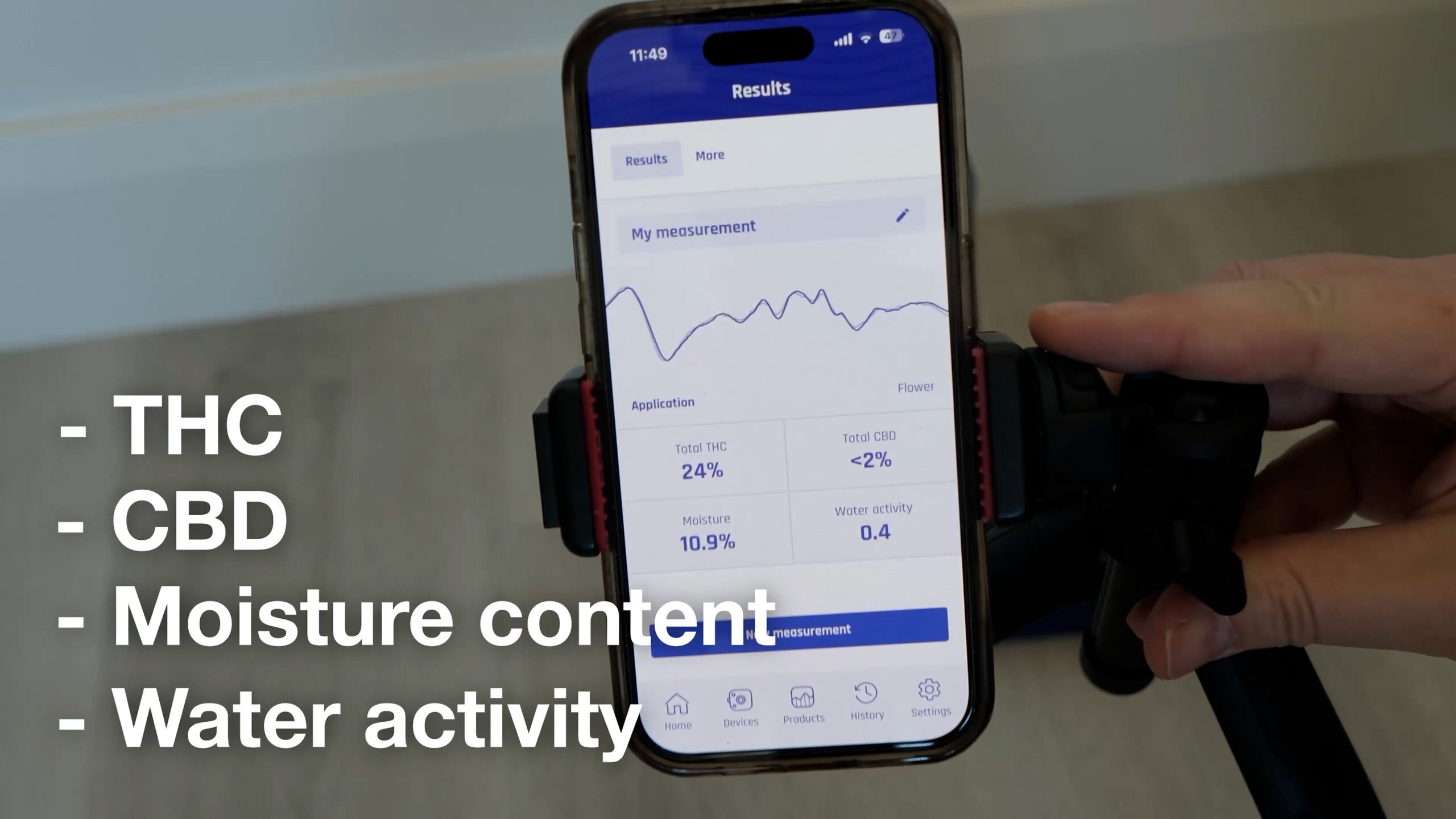
Visual appearance only tells part of the story. To get a better idea of how well each drying method performed, I tested samples from all three using an at-home cannabis testing device that measures THC, CBD, moisture content, and water activity.
While at-home testing isn’t a replacement for professional laboratory testing, it can still provide useful information when comparing different drying methods.
Many growers focus primarily on THC and CBD percentages, but moisture content and water activity are arguably more important when determining how well cannabis has been dried and how suitable it is for storage.
Moisture content measures the total amount of water remaining inside the flower. Generally, the ideal range for dried cannabis is 11–13% moisture content. If the moisture content is too high, there’s an increased risk of mold developing during storage. If it’s too low, the buds can become overly dry and brittle, potentially affecting their aroma, flavor, and overall quality.
Water activity is a little different. Instead of measuring the total amount of water inside the flower, it measures how much water is available for microbial growth. The ideal range for water activity is generally considered to be 0.55–0.65. If water activity is too high, there’s an increased risk of mold developing. If it’s too low, the flower can become overly dry and brittle, potentially affecting its quality during storage.
What the Results Showed
The biggest surprise from my testing wasn’t THC—it was moisture content.
The VCure produced drier flower than both the Cannatrol and the traditional grow tent. The moisture content and water activity measurements were lower than what I’d ideally like to see.
I think this is something that could potentially be improved by adjusting the VCure’s storage settings, which I plan to experiment with during future harvests.
The Cannatrol, on the other hand, produced moisture content and water activity measurements that were much closer to the ideal ranges. These were more in line with the results I was hoping to achieve.
Some of you may also notice that the Cannatrol samples had slightly higher THC measurements compared to the VCure.
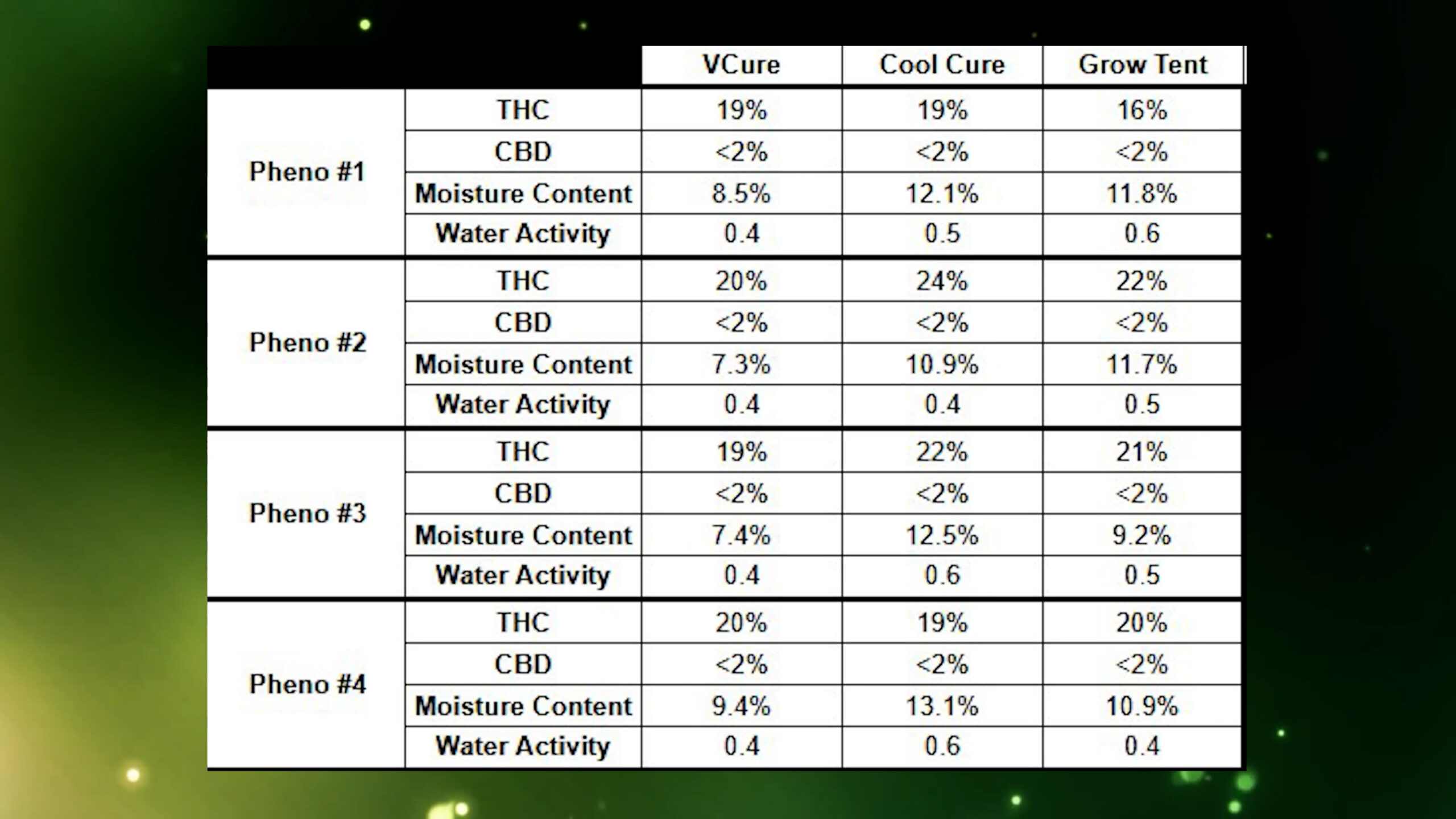
Whether that difference was caused by the VCure overdrying the flower or just natural variation between samples, I can’t say for sure. At-home testing devices have their limitations, and I’d need to do more testing before drawing any conclusions.
The traditional grow tent also performed surprisingly well. Its moisture content and water activity measurements were very close to the Cannatrol’s results.
One thing that stood out was a THC reading that came back noticeably lower than the other samples. Looking back, I probably should have retested that sample to see if the results were accurate.
Overall, the traditional grow tent produced results that were pretty close to the Cannatrol, showing that you don’t necessarily need an expensive drying machine to achieve good results.
Smoke Test Results
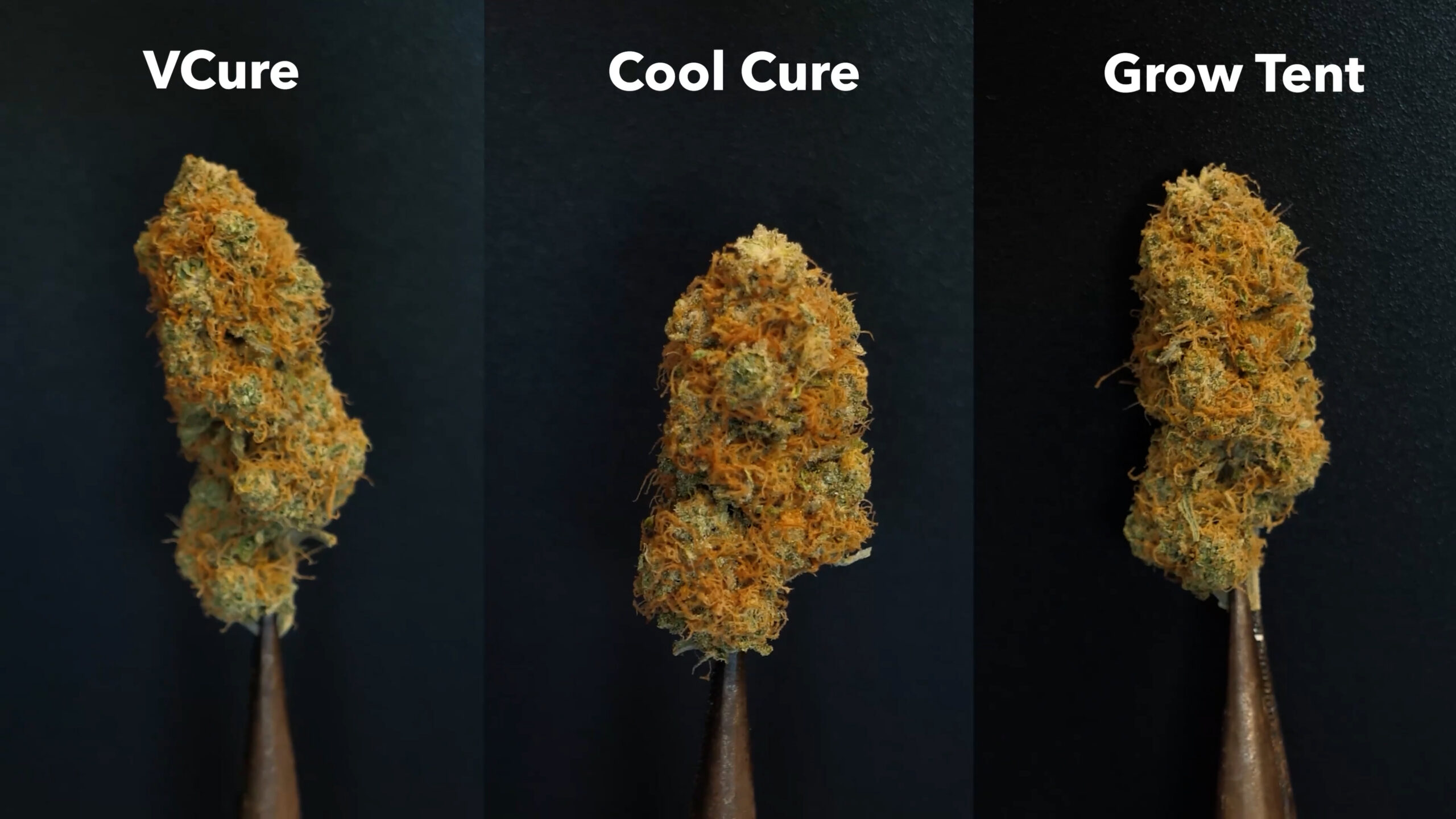
Test results are important, but they don’t always tell you how the flower actually smokes. To compare the three drying methods, I smoked each sample separately over several days, paying attention to the flavor, smoothness, burn quality, and harshness. What surprised me was how similar all three samples were.
All three samples burned evenly and produced white ash. None of them were noticeably harsh, which was a bit surprising considering the VCure flower had a lower moisture content than the others. The flavor was also very similar across all three samples. Each had an earthy, citrusy, and sweet flavor, with a fuel-like taste on the exhale. If someone had me smoke these samples without telling me how they were dried, I honestly don’t think I’d be able to tell the difference in flavor or identify which drying method was used.
This was one of the biggest surprises of the entire comparison. I think there’s a misconception that machine-dried flower automatically smokes better than flower dried traditionally in a grow tent. Based on my experience with these three samples, I can’t say that I agree with that.
Are Drying Machines Better Than a Traditional Tent?
After comparing the Cannatrol Cool Cure, Vivosun VCure, and a traditional grow tent, I don’t think there’s a clear winner. All three methods produced quality flower, and I couldn’t notice much of a difference when smoking them.
Where drying machines really stand out is convenience. Instead of constantly monitoring temperature and humidity, refilling humidifiers, or worrying about environmental fluctuations, these machines handle most of that for you. They also free up your grow tent so you can start your next grow sooner.


Between the two machines, the Cannatrol maintained more stable environmental conditions and produced flower with moisture content and water activity measurements closer to the ideal ranges.
The VCure has a modern design, slightly larger capacity, and a detailed mobile app. However, I wasn’t a fan of the frequent environmental fluctuations or how dry the flower became with the default storage settings. I’m hoping to improve those results by adjusting the settings during future harvests.
One improvement I’d like to see from both companies is a notification when water needs to be added, whether that’s to the Cannatrol’s sponge or the VCure’s water tray.
As for traditional drying, my testing showed that you don’t necessarily need to spend $1,000 or more on a drying machine to produce quality flower, provided you can maintain the right environmental conditions.


Ultimately, I think the biggest selling point of these machines is convenience and peace of mind. Whether that’s worth the investment is something each grower will have to decide for themselves.
If you’re interested in purchasing either of these machines, I have discount codes you can try. However, both companies activate and deactivate their discount codes depending on the promotions they’re running, so I can’t guarantee they’ll work.
Vivosun discount code: MRGROW15
Link to VCure: https://vivosun.com/vivosun-vcure-smart-post-harvest-box-p159688692373090695-v159688692373090694?ref=MrGrowit
Cannatrol discount code: MRGROWIT
Link to Cool Cure: https://cannatrols.com/collections/cool-cure?ref=x-RAAB57sJELaL
Frequently Asked Questions
Is the Cannatrol worth the money?
Based on my testing, the Cannatrol did a better job of maintaining stable temperature and humidity, and the flower had moisture content and water activity measurements closer to the ideal ranges. Whether that’s worth spending around $1,000 on depends on how much you value the convenience and consistency.
Does the VCure overdry cannabis?
Using the default Quick Cycle and storage settings, my flower ended up drier than I’d like. I think this could be improved by adjusting the storage settings, which is something I plan to experiment with during future harvests.
Can a grow tent produce results as good as these machines?
Absolutely. In my testing, the flower dried in the traditional grow tent smoked just as well as the flower dried in either machine. The key is being able to maintain stable temperature, humidity, and airflow throughout the drying process.
Which drying machine would I choose?
Based on the results of this comparison, I’d give the Cannatrol Cool Cure a slight edge because it maintained more stable environmental conditions and produced flower with moisture levels closer to what I was looking for.
That said, I still think the VCure is a good option, especially if you value its modern design and detailed app controls. I’d just recommend experimenting with the storage settings to avoid overdrying the flower.