If you’re new to growing cannabis indoors, choosing the right LED grow lights can feel overwhelming. There are hundreds of options on the market, all claiming better spectrum, higher wattage, or superior PAR output. Terms like PPFD, µmol/J, and full-spectrum lighting can quickly make the process confusing.
So what actually matters when buying LED grow lights? And how do you choose the right one for your specific grow setup?
This LED grow light buyer’s guide breaks everything down in simple terms—from coverage and light intensity to spectrum, efficiency, and build quality—so you can make an informed decision and maximize your yield.
Start with Your Grow Space: Coverage Area & Light Distance
The first and most important step when choosing LED grow lights is understanding your grow space. Measure the length, width, and height of your area. Most LED grow lights are designed for specific coverage footprints such as 2’×2’, 2’×4’, 3’×3’, 4’×4’, and 5’×5’.
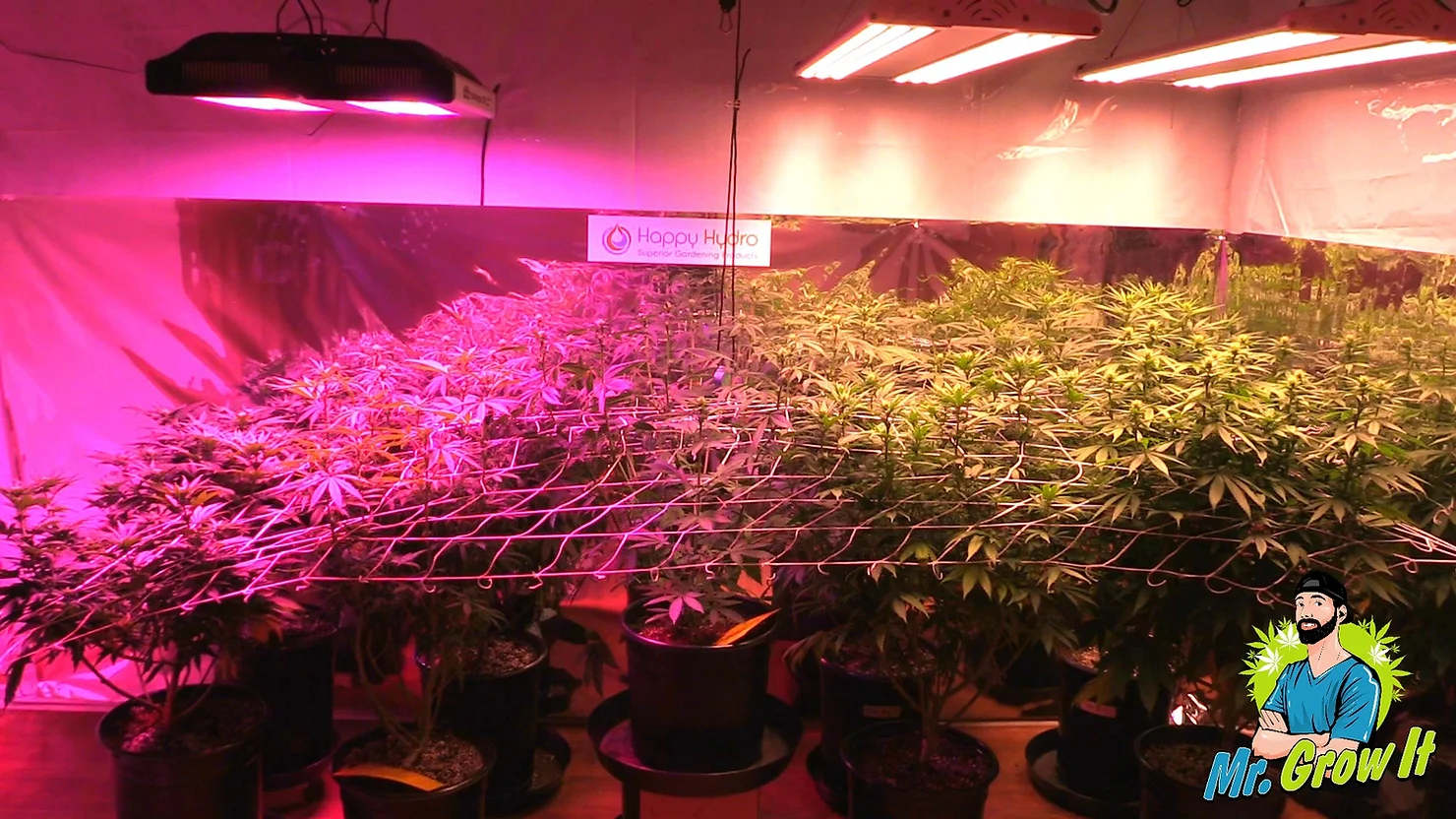
Coverage area is critical because your goal is to deliver even light across your entire canopy. Choosing a light that is too strong for a small space can cause light stress, while a weak light in a large space will lead to stretching and poor yields.

Height is just as important as width and length. Every LED grow light has a recommended hanging distance, which is the space between the light and the top of your plants. Many growers overlook this and end up with plants growing too close to the light.
For example, in a 4’×4’×6’ grow space, a light that requires a 24-inch (61 cm) hanging distance leaves you with only 4 feet of vertical space remaining. Then, you also need to account for pot height (often around 10–12 inches or 25–30 cm) and the space taken up by the light-hanging hardware. This reduces your usable plant height significantly.
Planning for proper light distance ensures healthy plant development and prevents issues like bleaching or heat stress.
Understanding PAR: What Actually Drives Plant Growth
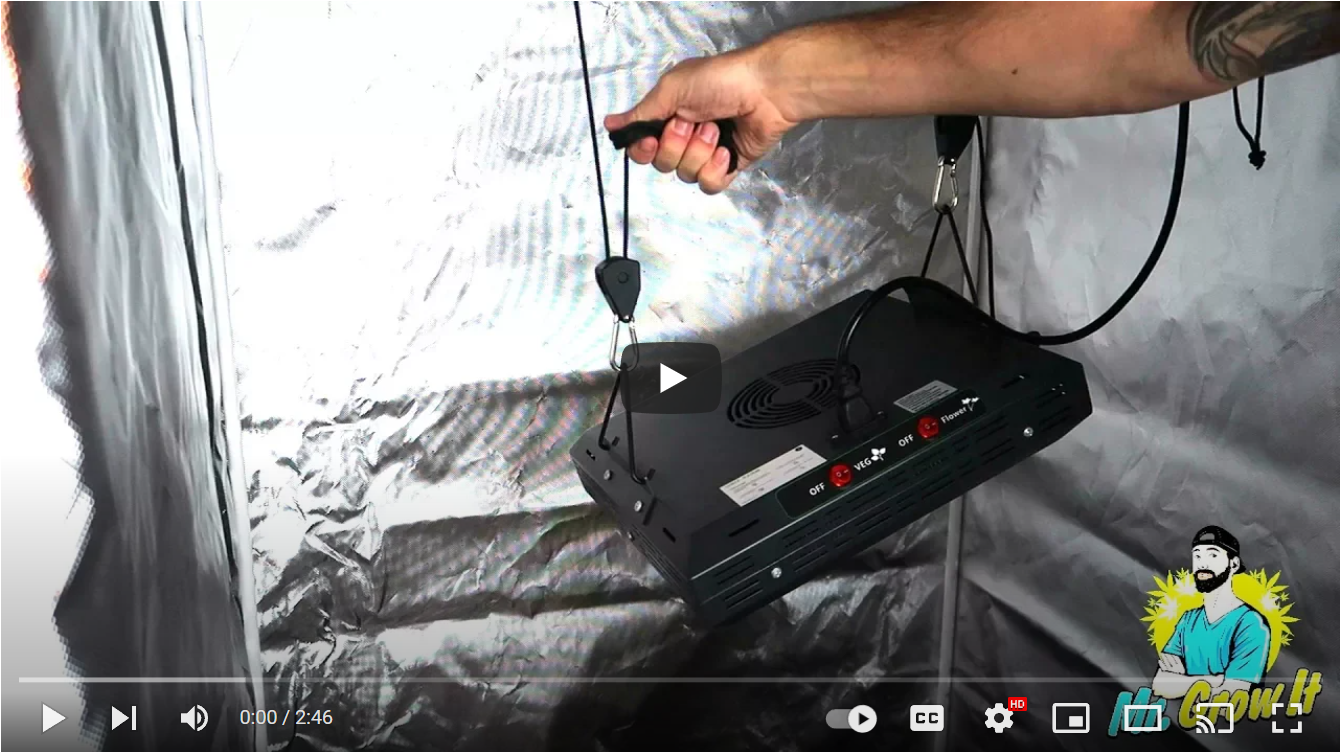
One of the most important concepts in cannabis lighting is PAR (Photosynthetically Active Radiation). PAR refers to the range of light wavelengths that plants use for photosynthesis.
Unlike watts or lumens, PAR directly relates to plant growth. When evaluating LED grow lights, you’ll see PAR expressed in three key metrics:
- PPF (Photosynthetic Photon Flux): The total amount of usable light produced by the fixture (measured in µmol/s).
- PPFD (Photosynthetic Photon Flux Density): The amount of light that reaches your canopy (measured in µmol/m²/s).
- Photon Efficacy (µmol/J): How efficiently the light converts electricity into usable photons.
For modern LED grow lights in 2026, a good benchmark is 2.5 µmol/J or higher, with high-end fixtures reaching 3.0 µmol/J or more.
Recommended PPFD Levels by Growth Stage
Cannabis plants require different light intensities at different stages:
- Seedlings and clones: 200–400 PPFD
- Vegetative stage: 400–600 PPFD
- Flowering stage: 600–900 PPFD
Some LED grow lights can produce PPFD levels above 900. While this can increase yields, it is only effective if you are supplementing with CO₂. Without CO₂ (ambient levels are around 400–500 ppm), excessive light can actually stress your plants rather than help them grow.
Why Watts, Lumens, and LUX Can Be Misleading
Many new growers assume higher wattage means a stronger light. In reality, watts measure energy consumption, not light output.
Two LED grow lights can both draw 400 watts but produce very different amounts of usable light depending on efficiency. That’s why metrics like PPFD and µmol/J are far more important.
Similarly, lumens, LUX, and foot candles are designed for human vision and do not accurately represent plant-usable light. If a manufacturer emphasizes these instead of PAR metrics, it’s a red flag.
Light Spectrum: Full-Spectrum vs Targeted Lighting
Spectrum refers to the range of light wavelengths emitted by your grow light. Different wavelengths influence plant growth in different ways.
Blue light (400–500 nm) supports vegetative growth by promoting compact structure and strong leaf development. Red light (600–700 nm) plays a key role in flowering by encouraging bud production.
Modern LED grow lights typically offer full-spectrum output, combining both blue and red wavelengths along with additional wavelengths in the PAR range (400–700 nm). Many also include small amounts of UV and far-red light, which can enhance terpene production and overall plant development.
The advantage of full-spectrum LED grow lights is that they can be used throughout the entire grow cycle without needing to switch fixtures.

Light Spread and Uniformity: Why It Matters More Than Peak Output
One of the most overlooked factors when choosing LED grow lights is light spread, also known as uniformity.
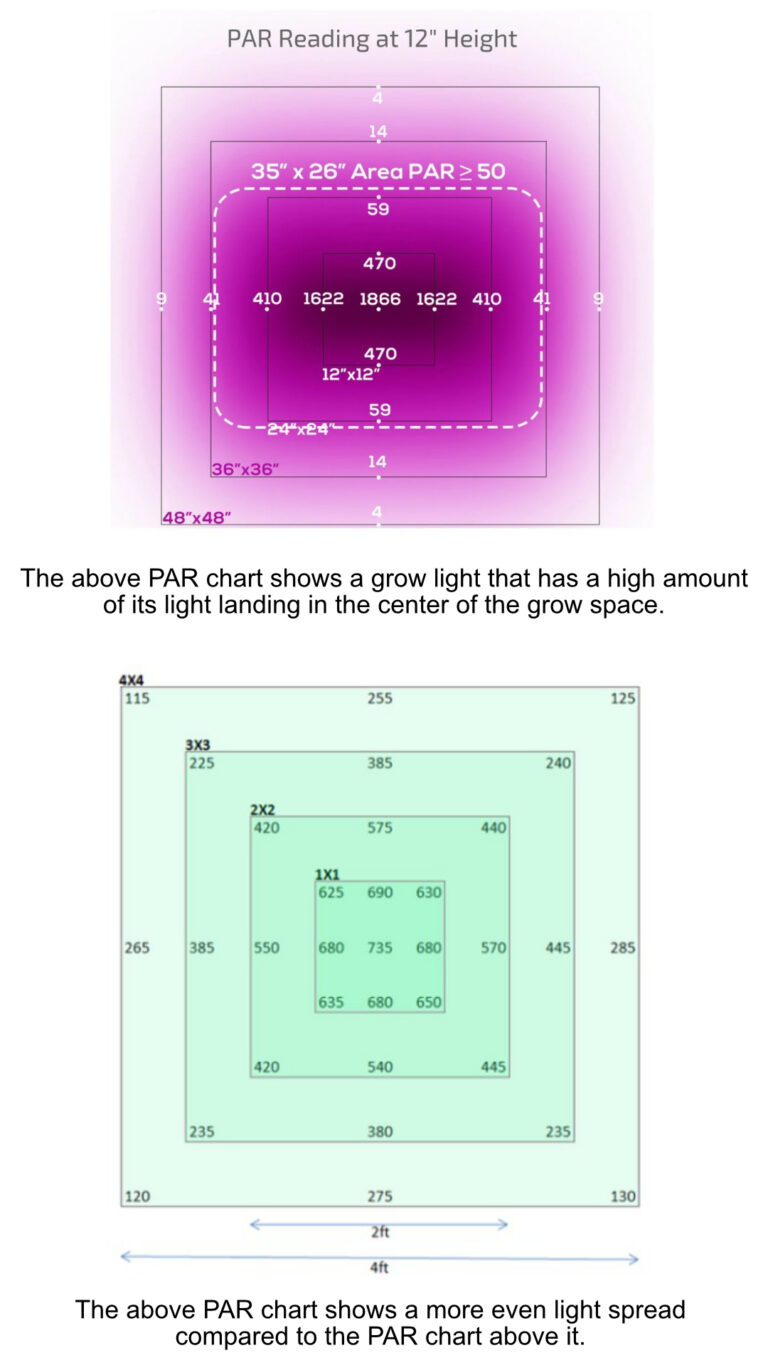
Older grow lights often concentrated most of their intensity in the center of the canopy, leaving edges underlit. This results in uneven growth, where some parts of the plant thrive while others lag behind.
Ideally, you want even PPFD distribution across your entire grow space. This ensures all branches receive similar light intensity, leading to consistent growth and uniform bud development.
You can evaluate this by looking at a grow light’s PPFD map (PAR chart). A good chart will show minimal drop-off from the center to the edges. If a manufacturer does not provide a PPFD map, that’s another warning sign.
Energy Consumption and Efficiency
Energy consumption is still important—just not in the way most beginners think. Higher wattage means higher electricity costs, but what really matters is how efficiently that energy is converted into usable light.
Efficient LED grow lights allow you to achieve better results while generating less heat and using less power. Over time, this can significantly reduce your operating costs.
As a general guideline, many growers aim for 30–40 watts per square foot of canopy when using modern LED grow lights, depending on efficiency and plant stage.

Diodes and Build Quality
The quality of the diodes used in LED grow lights has a direct impact on performance and longevity. Not all diodes are created equal, even within the same production batch. Manufacturers sort them through a process called binning, grouping diodes based on color accuracy and brightness.
“Top bin” diodes are the highest quality available. Leading manufacturers include Samsung, OSRAM, and Cree, and many growers specifically look for LED grow lights that use these components.
In addition to diodes, the driver is another critical component. High-quality drivers, such as those made by Mean Well, provide stable power and long-term reliability.

Warranty and Long-Term Reliability
A high-quality LED grow light is an investment, so warranty and support should not be overlooked.
Most reputable brands in 2026 offer at least a 3- to 5-year warranty, with some extending to 7 years or more. A shorter warranty—such as 1 year—can indicate lower build quality or less confidence from the manufacturer.
Choosing a light with a strong warranty protects your investment and ensures long-term performance.


Final Thoughts: Choosing the Right LED Grow Lights
Choosing the right LED grow lights comes down to understanding your grow space, your plants’ needs, and the key metrics that actually impact growth.
By focusing on coverage area, light distance, PAR output, spectrum, uniformity, efficiency, and build quality, you can confidently select a light that will deliver strong, consistent results.
Modern LED grow lights offer incredible performance compared to older technologies, and when chosen correctly, they can dramatically improve your yields, plant health, and overall growing experience.
Take the time to evaluate these factors before making a purchase, and you’ll ensure your investment is well spent—and your plants get exactly what they need to thrive.
Check out my top picks for the best LED grow lights in 2026:
Best LED Grow Lights for a 2×2 Coverage Area
Best LED Grow Lights for a 2×4 Coverage Area
Best LED Grow Lights for a 3×3 Coverage Area
Best LED Grow Lights for a 4×4 Coverage Area
Best LED Grow Lights for a 5×5 Coverage Area